Stocks and Shares ISA for Beginners: How to Start Investing Tax-Free in the UK
A Stocks and Shares ISA can sound more complicated than it really is.
At its simplest, it is an investment account that allows UK residents to hold investments such as funds, ETFs, bonds and company shares without paying UK Income Tax or Capital Gains Tax on the returns inside the account.
You do not need to be wealthy, understand every stock-market term or spend your evenings analysing company accounts. Many beginners start with a modest monthly contribution and one diversified investment.
The important part is understanding what the ISA protects you from, what it does not protect you from, and how to choose an FCA-regulated platform and suitable investments without paying unnecessary fees.
What is a Stocks and Shares ISA?
A Stocks and Shares ISA is a tax wrapper.
The ISA itself is not an investment. Think of it as a protective container that can hold investments. What happens to your money depends on what you place inside that container.
A Stocks and Shares ISA can generally hold:
- Shares in individual companies
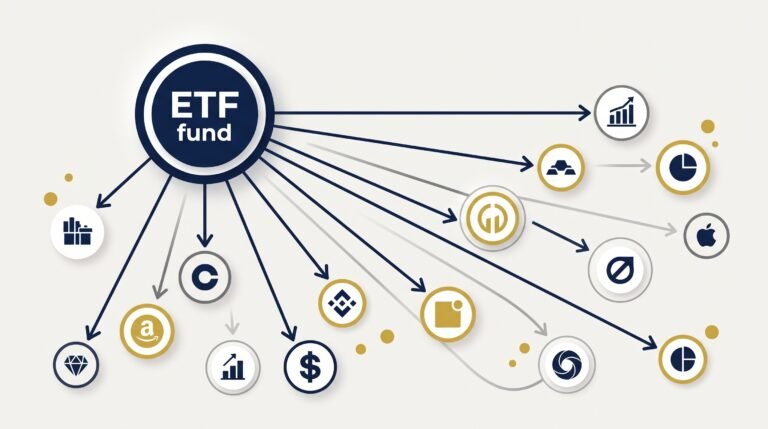
- Exchange-traded funds, or ETFs
- Unit trusts and other investment funds
- Investment trusts
- UK government bonds
- Corporate bonds
- Certain other qualifying investments
The government confirms that income and capital gains from investments held inside an ISA are not subject to UK tax, and you do not normally need to report them on a Self Assessment tax return.
That does not mean your investment cannot fall in value. The ISA protects eligible returns from tax; it does not protect your capital from market losses.
What is the ISA allowance for 2026/27?
For the 2026/27 tax year, which runs from 6 April 2026 to 5 April 2027, the total adult ISA allowance is £20,000. You can place the whole allowance into one ISA or divide it across different eligible ISAs.
For example, you could contribute:
- £5,000 to a Cash ISA
- £15,000 to a Stocks and Shares ISA
Alternatively, you could contribute the full £20,000 to a Stocks and Shares ISA.
Unused allowance normally disappears when the tax year ends. It cannot be carried forward into the following year.
Confirmed future ISA change
A reform announced for 6 April 2027 is expected to restrict people under 65 to placing no more than £12,000 a year into Cash ISAs, while retaining the overall £20,000 ISA allowance. People aged 65 and over are expected to retain the ability to place the full £20,000 into cash. The remaining allowance could still be used for eligible investments. Implementation details should be rechecked before the 2027/28 tax year because ISA legislation and provider processes can change.
The key point today is that the 2026/27 total ISA allowance remains £20,000.
How does a Stocks and Shares ISA make investing tax-efficient?
Investments can produce returns in two main ways:
- Their price may rise.
- They may pay income, such as dividends or bond interest.
Inside a Stocks and Shares ISA, eligible investment income and capital gains are generally sheltered from UK tax. You also avoid much of the tax reporting that may apply to investments held in a standard General Investment Account.
Suppose you invest £10,000 in an ETF and it eventually becomes worth £16,000.
Inside an ISA, the £6,000 gain would generally remain sheltered from Capital Gains Tax. Dividends paid by the ETF would also normally remain sheltered from UK Dividend Tax.
However, foreign withholding taxes may sometimes be deducted before overseas dividends reach the fund. An ISA does not always recover taxes deducted by another country at source.
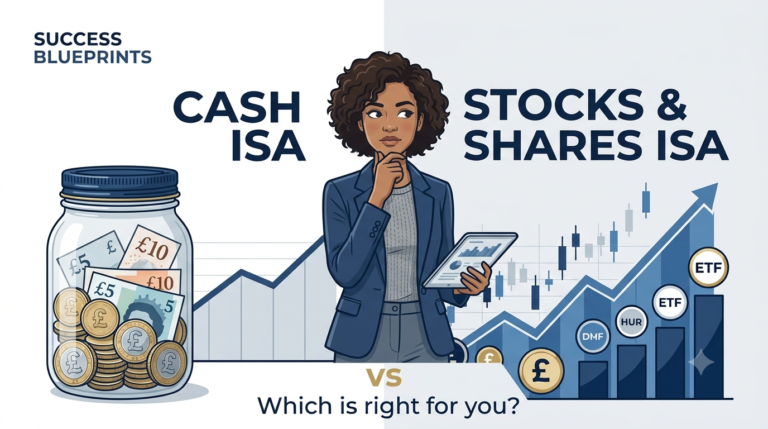
Cash ISA vs Stocks and Shares ISA
The choice is not simply about which account offers the highest potential return.
A Cash ISA is generally intended for money that needs to remain stable and accessible. A Stocks and Shares ISA is intended for money that can be invested for longer and exposed to market fluctuations.
A Cash ISA may be more appropriate for:
- An emergency fund
- Money needed within the next few years
- A house deposit with a fixed purchase date
- Someone unable to accept a fall in value
A Stocks and Shares ISA may be more appropriate for:
- Goals at least five years away
- Long-term wealth building
- Investors who can tolerate temporary market falls
- Money that is not needed for immediate expenses
For a full comparison of risk, inflation, access and likely time horizons, read Cash ISA vs Stocks and Shares ISA.
Do you need thousands of pounds to open an ISA?
No. Many platforms allow beginners to invest relatively small amounts, particularly where they support fractional investments or regular monthly plans.
Myth: Stocks and Shares ISAs are only for wealthy experts
A beginner investing £50 or £100 a month can use the same tax wrapper as someone investing the maximum annual allowance.
Starting with a manageable amount can be better than waiting until you feel completely confident. You can learn how your account works, experience normal market movements and build a regular investing habit without committing a large lump sum.
The amount you invest should still be affordable. Investing money needed for rent, bills, emergency expenses or expensive debt repayments can create avoidable financial pressure.
Before investing: build the right financial foundation
A Stocks and Shares ISA should usually sit on top of a stable financial foundation.
Before investing, consider whether you have:
- A workable monthly budget
- An emergency fund held in accessible cash
- A plan for high-interest credit cards, overdrafts or loans
- Adequate insurance for important financial risks
- Access to any valuable workplace pension contributions from your employer
Paying off debt charging 20% interest may provide a clearer financial benefit than investing while hoping to earn an uncertain market return.
This does not mean every loan or mortgage must be cleared first. It means expensive short-term debt and essential cash reserves deserve attention before exposing additional money to investment risk.
How to open a Stocks and Shares ISA
Step 1: Decide what the money is for
Give your investment a purpose.
Examples include:
- Building wealth over 10–20 years
- Supplementing retirement savings
- Creating a future education fund
- Building financial independence
- Funding a goal with a flexible date
Your goal affects your time horizon and how much volatility you can reasonably accept.
Money needed in two years should not usually be invested in the same way as money intended for retirement in 25 years.
Step 2: Choose an FCA-regulated investment platform
The platform administers the ISA, holds your investments and processes your deposits, purchases and withdrawals.
Check the provider on the Financial Conduct Authority register rather than relying only on an advert, social-media recommendation or app-store rating. Regulation does not protect you from normal investment losses, but it helps confirm that you are dealing with an authorised firm.
Here are common UK options for comparison, not personal recommendations:
| Platform | Why a beginner might consider it | Important costs or limitations |
|---|---|---|
| Trading 212 | Commission-free investing, fractional shares, automated “Pies” and access to shares and ETFs. Its UK entity states that it is FCA-regulated. | Other charges can apply, including foreign-exchange costs. Be careful to distinguish the Invest/ISA service from higher-risk CFD trading. |
| Freetrade | Its Basic plan currently costs £0 per month and includes a Stocks and Shares ISA, with commission-free access to shares, ETFs and investment trusts. It is FCA-authorised. | The Basic plan lists a 0.99% foreign-exchange fee on non-sterling trades, so frequent overseas share purchases can still become expensive. |
| InvestEngine | Focuses on ETFs. DIY portfolios currently have no platform or dealing fee, while managed portfolios charge 0.25% a year. It is FCA-authorised. | It does not suit investors who specifically want to select individual company shares. ETF charges and market spreads still apply. |
| Vanguard Investor | Straightforward range of Vanguard funds and ETFs, with both self-managed and managed options. | A self-managed account below £32,000 currently costs £4 a month; balances of £32,000 or more are charged 0.15% a year, subject to a cap. Fund charges apply separately. |
Provider prices, investment ranges and minimum purchase amounts change. Check the current tariff before opening an account.
Do not choose a platform purely because it advertises “zero commission”. Compare:
- Platform or subscription fees
- ETF or fund charges
- Dealing fees
- Foreign-exchange fees
- Bid-offer spreads
- ISA transfer fees
- Customer support
- Regular-investing features
- Whether your preferred investment is available
Step 3: Choose what to invest in
Opening an ISA does not automatically invest your money. Cash deposited into the account may remain uninvested until you select an investment.
Beginners commonly consider three approaches.
A diversified global fund or ETF
A global equity fund may hold hundreds or thousands of companies across the UK, United States, Europe, Japan, emerging markets and other regions.
This reduces the impact of one individual company failing, although the whole fund can still decline when global markets fall.
A multi-asset fund
A multi-asset fund combines shares with assets such as bonds.
The bond allocation may reduce some volatility, although it can also reduce long-term growth potential and bonds can fall as well as rise.
Individual company shares
Buying individual shares gives you more control, but also increases concentration risk. A portfolio containing three companies is far less diversified than a broad-market fund containing hundreds or thousands.
For a detailed explanation of index tracking, London Stock Exchange trading, diversification and ETF costs, read How ETFs Work for UK Investors.
What investment fees should beginners understand?
Small percentages can have a large effect over long periods.
The main costs include:
- Platform fee: charged by the ISA provider
- Fund or ETF charge: deducted within the investment
- Dealing fee: charged when buying or selling
- Foreign-exchange fee: charged when currencies are converted
- Bid-offer spread: the gap between the price at which an ETF can be bought and sold
ETFs trade in a similar way to shares, which means their buying and selling prices may differ. Vanguard describes that difference as the bid-offer spread and identifies it as a one-off cost when trading an ETF.
A low-cost portfolio is not automatically a suitable portfolio, but excessive charges create a hurdle your investments must overcome.
Worked example: investing £100 a month for 20 years
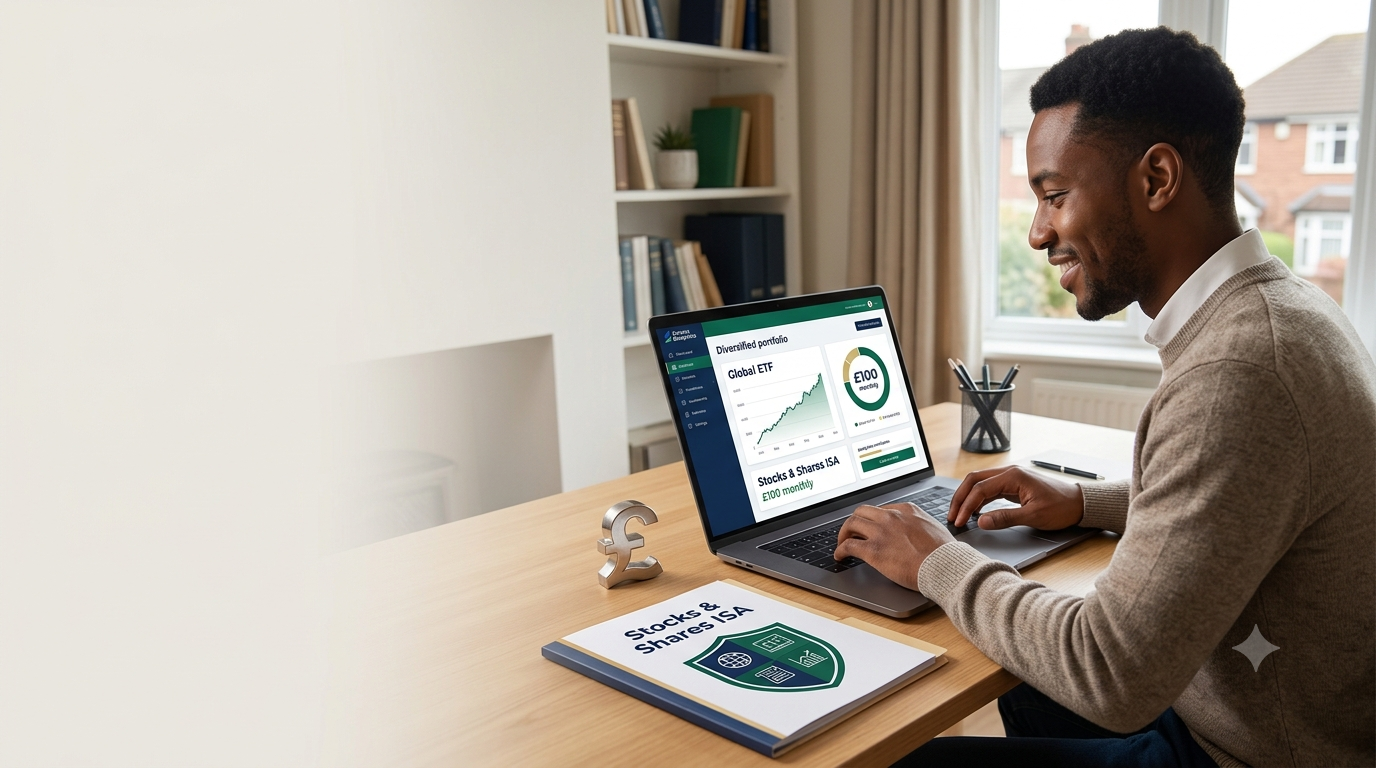
Imagine you invest £100 a month into a diversified global investment inside a Stocks and Shares ISA for 20 years.
Your total contributions would be:
£100 × 12 months × 20 years = £24,000
Assuming a hypothetical average return of 5% a year after costs, with monthly compounding, the account could grow to approximately £41,100.
That would represent roughly:
- £24,000 contributed
- £17,100 of hypothetical growth
This is only an illustration. Actual returns will not arrive smoothly, markets may fall sharply, fees may differ and the final value could be materially higher or lower. Inflation would also reduce what that future amount could buy.
The purpose of the example is not to forecast your return. It shows how regular contributions and time can matter more than trying to identify the perfect day to invest.
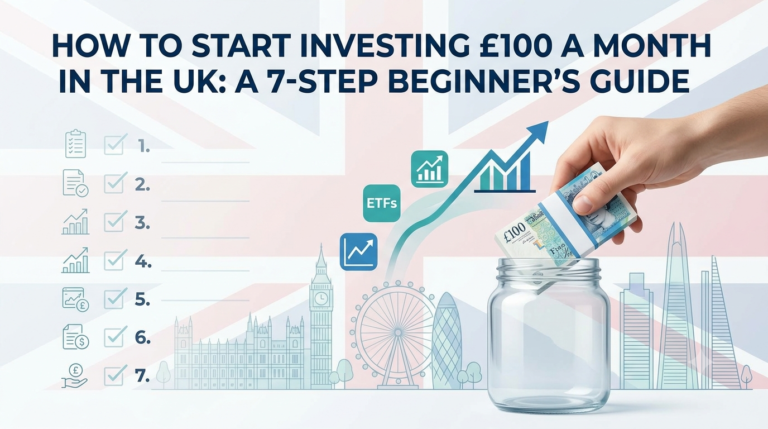
Read How to Start Investing £100 a Month in the UK for a practical monthly setup using an ISA and low-cost ETFs.
Should you invest monthly or use a lump sum?
Monthly investing can suit beginners because it:
- Aligns with monthly income
- Automates the habit
- Avoids committing all available money on one date
- Buys more units when prices are lower and fewer when prices are higher
A lump sum gets more money invested sooner, but it can feel uncomfortable if the market falls shortly afterwards.
The right method depends on when the money becomes available, your emergency reserves and your ability to tolerate short-term losses. Neither approach removes investment risk.
Can you withdraw money from a Stocks and Shares ISA?
You can normally withdraw money from an ISA without paying tax on the withdrawal. However, you may have to sell investments first, and their value could be below the amount originally invested.
Some ISAs are flexible. A flexible ISA may allow you to withdraw and replace money during the same tax year without using additional allowance. With a non-flexible ISA, replacing withdrawn money may count as a new subscription.
This accessibility is one of the major differences between an ISA and a pension. Pension money is normally locked away until the permitted pension-access age, whereas ISA money is generally available when needed.
Common Stocks and Shares ISA mistakes
Investing the emergency fund
A market fall may force you to sell at a loss precisely when you need the money.
Choosing investments only because they recently performed well
Last year’s winning sector, country or fund may not remain the winner.
Owning too many overlapping funds
Holding five global ETFs does not necessarily create five times the diversification. They may own many of the same companies.
Ignoring fees
A platform that is inexpensive for a £2,000 portfolio may become less competitive at £50,000, or vice versa.
Trading too frequently
Repeatedly switching investments can increase costs and encourage emotional decisions.
Withdrawing an ISA to move providers
Use the formal ISA-transfer process. GOV.UK warns that withdrawing the money yourself instead of using a provider transfer may cause the replacement contribution to use your current allowance.
Is a Stocks and Shares ISA safe?
There are two separate questions.
First, is the provider properly authorised and administering client assets according to UK regulations?
Second, can the investments themselves fall?
An FCA-regulated platform can still offer investments that fall significantly in value. Regulation is not a guarantee of positive returns.
A diversified global ETF is generally less dependent on one company than an individual share, but it remains exposed to market, currency, economic and political risks.
Investments can go down as well as up, and you may receive back less than you invest.
Your practical next step
Start by choosing a realistic monthly amount, even if it is only £50 or £100.
Then:
- Check that you have accessible emergency savings.
- Compare FCA-regulated Stocks and Shares ISA providers.
- Review the complete fee schedule.
- Research one diversified, low-cost investment.
- Set up an affordable monthly contribution.
- Review the plan periodically rather than reacting to daily headlines.
Download the free Success Blueprints UK Wealth-Building Starter Kit for simple budgeting, debt, saving and investing steps, then join the email list for weekly UK investing explanations and practical checklists.
The next guide in this series is Cash ISA vs Stocks and Shares ISA, followed by a practical guide to investing £100 a month in the UK.
Disclaimer
This article is for general educational purposes only and does not constitute personalised financial, investment or tax advice. Tax rules depend on individual circumstances and may change. Investments can fall as well as rise, and you may receive back less than you invest. Consider speaking to an FCA-authorised financial adviser if you are unsure whether an ISA or investment is suitable for you.