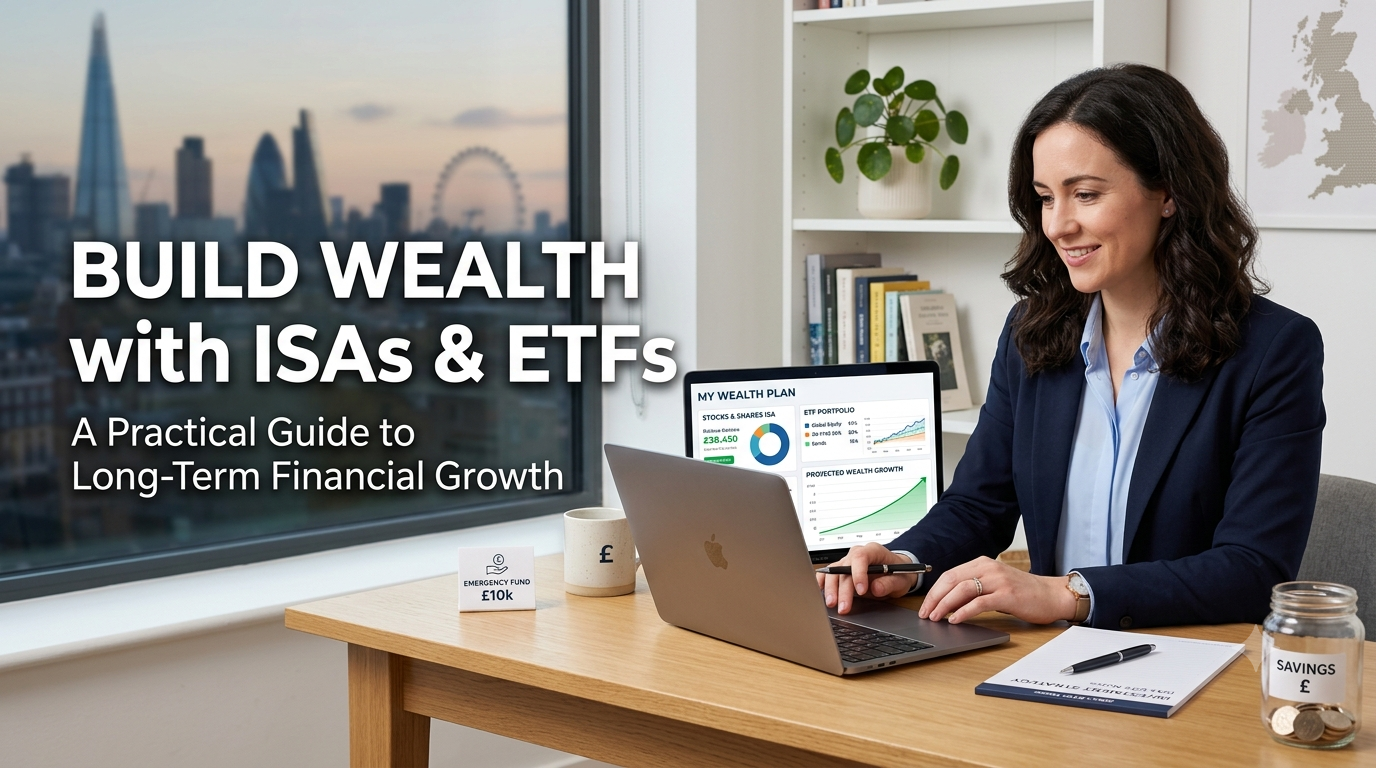
Building Wealth with ISAs and ETFs: A Practical 6-Step UK Plan
Building wealth with ISAs and ETFs can feel impossible when a good salary still disappears into bills, debt and everyday spending. You may know you should invest, yet feel unsure whether to begin before every debt is cleared.
This guide gives you a practical sequence to follow. You will learn how to protect your cash flow, reduce expensive debt, invest tax-efficiently and create extra income without trying to pick the next winning share.
Success Blueprints provides clear, UK-focused money education for ambitious professionals and entrepreneurs. This article is educational rather than personal financial advice, and investments can fall as well as rise.
Why building wealth with ISAs and ETFs works
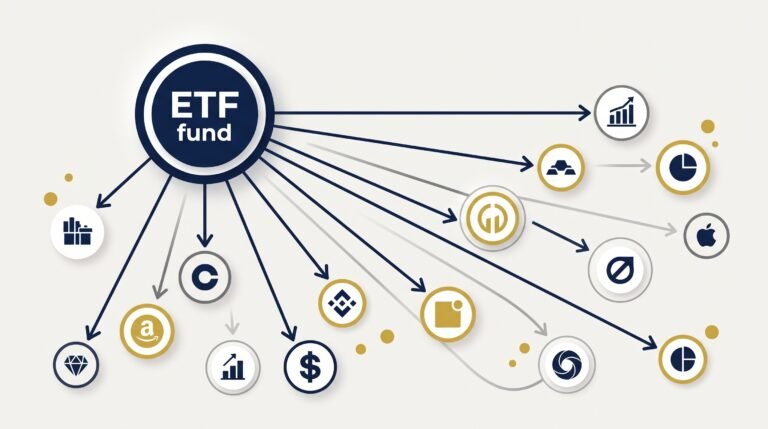
An Individual Savings Account, or ISA, is a tax-efficient account that can hold cash or investments. An exchange-traded fund, or ETF, is a fund traded on a stock exchange; many ETFs track an index and spread investors’ money across hundreds or thousands of companies.
Together, the ISA provides tax efficiency while the ETF provides relatively simple diversification. This does not remove investment risk, but it can create a stronger foundation than depending on a handful of individual shares.
The FCA’s 2024 Financial Lives research found that one in ten UK adults had no cash savings and another 21% had less than £1,000 available for an emergency. It also found that 61% of people with more than £10,000 in investible assets kept at least three-quarters of those assets in cash. A sensible plan therefore needs both emergency savings and long-term investing.
Building wealth with ISAs and ETFs in six steps
Build an emergency fund and triage your debt
Create a cash buffer before investing heavily, so a car repair or broken boiler does not force you back onto a credit card. Start with £500–£1,000, then work towards three months of essential expenses.
List every debt by balance, minimum payment and annual percentage rate. Deal first with priority debts such as mortgage or rent arrears, council tax, energy bills and court fines.
Example: If your essential spending is £1,600 a month, a three-month emergency fund target would be £4,800. You could first save £750, then divide your spare cash between the emergency fund and your most expensive non-priority debt.
Checklist
- Keep your emergency fund in an easy-access savings account.
- Record every balance, interest rate, minimum payment and repayment charge.
- Get free debt advice if you are missing payments or borrowing for essentials.
MoneyHelper suggests that three to six months of living expenses can provide a useful emergency reserve. Start smaller when necessary and build towards this gradually.
Choose the right ISA for your goal
For the 2026/27 tax year, the overall adult ISA allowance is £20,000. Eligible interest, investment income and capital gains generated inside an ISA are generally sheltered from UK Income Tax and Capital Gains Tax. Always check the latest GOV.UK ISA guidance because allowances and rules can change.
A Cash ISA can suit emergency savings and shorter-term goals. A Stocks and Shares ISA may suit money that you will not need for at least five years, provided you can accept that its value may fall.
A Lifetime ISA may help an eligible first-time buyer or later-life saver. You must make your first payment before turning 40, can contribute up to £4,000 each year until 50 and receive a 25% government bonus.
For a first-home purchase, current rules include a £450,000 property price limit, buying with a mortgage and waiting at least 12 months after the first payment. Most other early withdrawals face a 25% charge. Review the full Lifetime ISA rules on GOV.UK.
Example: A 32-year-old planning to buy in four years might use a Lifetime ISA for the deposit and a separate Stocks and Shares ISA for money intended for ten years or more.
Checklist
- Match the ISA to the date when you expect to need the money
- Compare platform, fund, dealing and transfer fees.
- Check the current tax-year rules before making contributions.
For many people researching ISAs for young professionals, the answer is not choosing one account for everything. It is giving each financial goal the most suitable account.
Build a simple ETF core portfolio
A core investment portfolio should be diversified, affordable and easy to continue through difficult markets. One broad global equity ETF can provide exposure to many countries, industries and companies.
A more cautious investor might combine global equities with a broad bond ETF. Someone investing for several decades and able to tolerate larger falls might choose a higher equity allocation.
This helps answer the ETFs vs stocks UK question. One company can be badly affected by poor management, regulation or changing customer demand. A broad ETF spreads company-specific risk, although the entire fund can still fall when markets decline.
S&P Dow Jones Indices’ SPIVA Europe research reported that 75% of sterling-denominated global equity active funds underperformed the S&P World during 2025. This does not guarantee that every index ETF will outperform, but it supports controlling costs and expectations rather than assuming a fund manager or stock picker will consistently beat the market.
Example: Instead of buying five fashionable technology shares, a beginner could research one low-cost global index ETF and invest a fixed amount each month. This is an illustration rather than a personal recommendation.
Checklist
- Read the ETF factsheet, tracked index, holdings and ongoing charge.
- Avoid leveraged, inverse or highly specialised products as a beginner.
- Choose an allocation you could continue holding during a market fall.
Automate building wealth with ISAs and ETFs
Some of the most effective Stocks and Shares ISA tips are behavioural. Set a direct debit shortly after payday, automate the investment where possible and increase the contribution whenever your income rises.
Regular investing removes the pressure to guess the perfect day to enter the market. It cannot prevent losses, but it creates consistency and reduces the temptation to make emotional decisions.
Consider a simple illustration. Investing £300 each month for ten years at an assumed annual return of 6% would grow to approximately £49,164.
You would contribute £36,000, while roughly £13,164 would come from investment growth. This calculation assumes monthly compounding, ignores fees and does not represent a guaranteed return.
Example: Start with £150 a month, then direct half of each future pay rise or new client retainer towards your ISA.
Checklist
- Automate both the contribution and ETF purchase.
- Review your plan once or twice a year rather than every day.
- Track contributions made across different ISA providers.
Clear Expensive Debt Strategically
Building wealth with ISAs and ETFs becomes harder when high-interest debt is compounding against you. Pay at least the minimum on every account, then direct all your extra repayment money towards one target.
The avalanche method targets the debt with the highest interest rate first. It will normally save the most interest.
The snowball method targets the smallest balance first. It may cost more, but the faster wins can help some people remain motivated.
When deciding how to clear debt fast in the UK, account for priority bills, 0% promotional expiry dates, balance-transfer fees and early repayment charges. Using savings to reduce expensive debt can lower your overall costs, but check for penalties first.
Example: Suppose you have a £2,000 credit card at 24.9%, a £5,000 loan at 9.9% and a £600 interest-free balance. The avalanche method targets the 24.9% card first. Once it is cleared, roll the entire payment into the loan.
Checklist
- Maintain minimum payments on every account.
- Use avalanche unless snowball helps you stay more consistent.
- Reduce extra investing while very expensive consumer debt remains.
Anyone struggling with payments can use the MoneyHelper Debt Advice Locator or contact StepChange Debt Charity for free, confidential support.
Increase Your Income with Scalable UK Side Hustles
Cutting expenses has a natural limit. Your income has more room to grow.
Focus on side hustles that turn a skill into a repeatable offer or create an asset that can be sold more than once.
Digital products
Build a spreadsheet, template, checklist or short guide that solves one clearly defined problem. Speak to ten potential customers, validate demand and create a useful first version before spending months perfecting it.
Productised freelancing
Offer one fixed outcome, such as a LinkedIn profile refresh, monthly bookkeeping clean-up or WordPress website review. Select a niche, publish a clear scope and price, then contact five relevant prospects each weekday.
Educational content
Build a focused newsletter, blog, podcast or video channel. Publish one useful piece each week, collect email subscribers and later monetise through disclosed affiliate links, sponsorships or your own products.
Example: If a side hustle produces £400 a month after costs and tax provisions, you could direct £250 to debt, £100 to your ISA and £50 towards business reinvestment. After clearing expensive debt, redirect the £250 towards investing.
Checklist
- Choose one offer, one audience and one main sales channel.
- Set money aside for tax and record business expenses.
- Reinvest early revenue into delivery, skills and distribution.
Mini-case study: A Manchester professional builds momentum
Amira, 29, earned £38,000 as a project coordinator in Manchester. She had £3,200 on a credit card at 23.9%, £400 in savings and no investments. She built a £1,000 starter emergency fund while making minimum payments, then added £350 a month to the card using the avalanche method.
Amira also sold project-planning templates and offered a fixed-price CV organisation service. Within four months, the side hustle averaged £280 a month after costs. She reserved 20% for tax and sent most of the remaining money towards debt, clearing the card in nine months.
She then grew her emergency savings to £4,500 and invested £250 a month in a broad global index ETF through a Stocks and Shares ISA. After receiving a pay rise, she increased this to £325.
Eighteen months after starting, Amira had no credit-card balance, a stronger cash reserve and more than £4,000 invested. Her progress came from automated transfers and repeatable extra income, not perfect market timing.
Remember Your Pension
ISAs are flexible, but workplace and personal pensions remain important. Employer contributions and pension tax relief can be valuable, while the rules governing when you can access pension money differ from ISA rules.
Treat pensions and ISAs as complementary rather than competing accounts. Consider regulated financial advice when dealing with complex pension, tax or investment decisions.
Frequently Asked Questions
Should I clear all debt before investing in an ETF?
Not always. Keep priority bills current and usually clear expensive consumer debt before investing heavily. You might still contribute enough to receive your workplace pension employer match and invest a small amount to develop the habit. Compare the debt’s guaranteed interest cost with uncertain investment returns.
Is a Cash ISA or Stocks and Shares ISA better?
Cash normally suits an emergency fund or money needed within approximately five years. A Stocks and Shares ISA may suit longer-term goals when you accept volatility. Many professionals use both, giving each account a clear purpose and timeframe rather than expecting one product to do everything.
How many ETFs does a beginner need?
One broad, diversified ETF may be enough for a simple equity core. Add other funds only when they deliberately change your asset allocation or fill a genuine gap. Check overlapping holdings, total costs and risk instead of assuming that owning more ETFs automatically provides better diversification.
Start Your Wealth Plan Today
Building wealth with ISAs and ETFs does not demand perfect timing or a six-figure salary. It requires a cash buffer, a targeted debt strategy, a diversified investment plan and an income engine that creates more money for your goals.
Subscribe to Success Blueprints and download the free starter kit for practical worksheets, checklists and tools to organise your debts, choose your next financial priority and begin investing confidently. Get the free Success Blueprints starter kit.


3 Comments
Comments are closed.